

Biggest Lesson For 2026: Don't Chase Whales While Building A Boat
2025 year-in-review build-in-public post from Pier's CEO, Dave. Dave shares hard lessons, early missteps, and why small businesses are at the center of how we’re building AI for hiring.
Broadcasting My Deficits
I made myself a promise this year: be more transparent, honest, and open about what I’m building—the setbacks and learnings, not just the wins. Much of my career, I’ve been advised not to broadcast my deficits. But I’m realizing that I was ill-advised. The challenges are where real learning happens—for me and anyone watching. This blog is part of that. It’s for me first—catharsis and reflection. It’s for small business owners exploring our website who want to know who we are and why we’re passionate about solving the hiring crisis. It’s for my community—investors, friends, family who deserve to see the reality. And it’s for any founder or dreamer out there who might find something useful in watching someone else figure this out.
I’m writing this on the first Monday of 2026, which feels appropriate. The past year taught me more about building a company than any I’ve had before, and most of those lessons came from doing things wrong.
I’m 48, turning 49 this year. My co-founders Brandon and Kai are 36 and 24. We span three generations, three completely different backgrounds—media, tech, and business—and we work 80+ hour weeks making less money than any of us have in years. Most of my peers are settling into the long haul. I’ve never been comfortable with the 9-to-5, but going after it again at my big age means building a company where AI is central to everything we do—and the landscape keeps shifting. Notion, Linear, GitHub, AI agents everywhere. I’ve always relied on instinct and building good teams around me, but I’m not gonna lie to you—it’s dumb hard becoming adept in entirely new areas at this stage.
Some days I question everything, but most days I’m absolutely certain we’re onto something special.
The Year We Built In Circles
At the beginning of last year, we launched Project Nucleus, a pilot community for a professional matchmaking platform. The idea was simple: help people make better professional connections. With little marketing we got hundreds of signups from over eight different countries. People were excited. We thought we’d cleared the product hurdle.
But as we talked to investors and stakeholders throughout the spring, a pattern emerged. Everyone kept circling back to the same question: “What’s the business model? Who’s actually going to pay you?”
I had one. Freemium, network effects, eventual premium tiers. But when they dug deeper—“How fast can you scale this? What’s your path to profitability?”—the math wasn’t mathing. The sobering truth was there was no way I could scale users quick enough to reach profitability especially with our limited cash runway. One investor left us with a clear directive: “Find customers who are eager to pay you real money to solve an immediate problem for them.”
That’s a humbling lesson when you’re the oldest guy on the team and you’ve exited companies before—twice. But here’s the thing about being a founder: you’re always learning, even when—especially when—you thought you already knew.
By summer, we faced a harder reality: a significant portion of our Project Nucleus community was people looking for jobs. They were engaged but they weren’t going to pay us. We couldn’t build a profitable business model solely around people seeking employment.
I’d publicly committed to Project Nucleus—across my network, on social platforms, to friends who believed in the vision. But, we had to make a shift and admit that this direction wasn’t going to work. That’s not easy. But I chose long-term viability over short-term perception.
People still hit me up about Project Nucleus. Even now. It still eats at me. So many people were open about the opportunities and challenges they were facing. I felt like I’d let them down. But I know it would be a bigger let down to create a platform that we could not sustain. The network model is tough with limited funding and we needed a more financially reliable customer base.
So we started looking at the other side of the equation. If these people were struggling to find the right opportunities, what was happening with employers and hiring managers? What problems were they facing?
We asked Kai to dig deeper. He talked to more than 50 hiring managers. Here’s what we discovered: they were drowning. Way more people applying to the same positions. The competition was overwhelming them. They couldn’t tell who was real anymore, couldn’t verify if candidates actually did the work they claimed, and didn’t have time to figure it out. So they just stopped responding and some stopped hiring altogether. This is why so many folks, including those in Project Nucleus, could not find work.
And then something happened. The exploratory conversations Kai was having turned into concrete interest from employers—“When can you build this?” Real urgency. Real commitment. For the first time we had validation—not just that there was a problem, but that people would actually pay us to solve it.
What excited me about Kai’s research was knowing that on the macro level, this would ultimately serve the same people who believed in Project Nucleus—either directly or indirectly through the opportunities we’re funneling.
Brandon likes to say the best businesses offer painkillers, not vitamins. Project Nucleus had been a vitamin—nice to have, but not urgent. What we discovered was employers had a real headache: drowning in perfect-looking resumes but unable to find real talent. And our technology was perfectly positioned to solve it.
That’s when the path became clear to me and our focus sharpened. We started building Pier—an AI-powered pre-interview platform that has actual conversations with candidates to pull out the stories and signals that resumes can’t provide.
The Whale That Nearly Swallowed Us
Mid-summer, we began to engage more seriously with a potential investor we’d initially met in April. She wanted to take us big. Really big. IPO-level big.
She saw what we were building and said all the things you want to hear. Connections to Fortune 500 companies, introductions to institutional investors, a path to going public. She’d just closed a major deal, gotten a company listed on NASDAQ. She knew people—the kind of people who could write big checks and open big doors.
You have to understand—we’d been fundraising for so long, always seemingly at the end of our rope. To have someone with her reputation, who’d built so many great things, who came highly recommended from one of our stakeholders, say she was going to close the gap and that she was all in—you believe that person. It was a relief to have that caliber of support.
But there was a catch. We needed to go up market. Stop focusing on small businesses. Go after mid-market companies. Actually, go even bigger—enterprise. That’s where the real money is, she said. Staffing agencies. Major corporations. Think bigger.
It made sense on paper. I wanted to believe it. My job is to bring the team wins, to keep us funded while Brandon codes and Kai talks to customers. When someone like this shows interest, you don’t just say no.
So I acquiesced. We acquiesced. I required a lot from my team to make sure she felt we were easy to work with. We started reshaping our pitch—enterprise licensing, white-labeling, staffing partnerships. The conversations got longer, the terms more complex, the timeline kept stretching. “Send me the updated deck. Revise your financial model. Let me introduce you to some people, but do this first.” I took notes on every call. We started building what she wanted to see instead of what we knew how to build.
I exhausted months on this. Led the team down that path. And then her commitments started dwindling—high six figures became mid, then lower. The number kept shrinking with each conversation. But chasing the whale pulled us away from starting small—proving this worked with real customers before trying to scale.
Into the fall, the deal fell apart. I sent an email laying out what we needed: a face-to-face meeting, clarity on reduced investment terms, honest conversation about what this partnership would actually mean. If she couldn’t prioritize that meeting, we’d move forward with alternative funding.
She couldn’t. The whale swam away.
When it fell apart, I worried we’d lost who we were in the process chasing her vision. Where did this leave us as a team? What was our business model? Did we have enough runway to rebound from the loss of time? There was so much confusion because there had been so much hope.
We didn’t even talk about it as a team. We just had to keep moving.
But I felt defeated. I’d let my team down—I’d put too many eggs in this basket. Those months had created strain between us. I could feel it even in the silence.
The entire ordeal sent me back to therapy. Some losses are too difficult to simply shrug off.
But here’s what I learned: We’d been contorting ourselves to chase a vision that wasn’t ours. Enterprise deals that take months to close. Pricing models for corporate budgets. Strategic partnerships that pull you away from the problem you actually understand. The allure of the whale makes you forget what you’re actually trying to do.
Finding Our Way Back
After the whale swam away, I took a week. Therapy. Reflection. Processing what had happened.
Then one evening Brandon and I sat down over some frozen margaritas. We talked about where we’d gone wrong, what we actually wanted to build. The team needed that conversation. I needed that conversation. We had to refocus. We’d got distracted by what we thought would be easier not what we know is right.
We weren’t out here to help Fortune 500 companies get bigger. We started this to connect people with opportunities. I’d been a small business owner—with TheGrio, with this company. I understood what it meant to have a vision, a dream that gets bottlenecked by hiring. And I also understood that there are people who need jobs, particularly people of color. Our people.
I felt like we’d lost that. Lost the mission.
Shortly thereafter, came confirmation.
Brandon was coding at a café in Brooklyn. He overheard the owner interviewing someone for a barista position. They got talking afterward. She was exhausted by “Gen slop GPT resumes,” as she put it—everything over-polished, over-written, impossible to tell who was real. With job postings now getting hundreds of applications, she was drowning. What she wanted was to know someone’s vibe, see what made them interesting.
Brandon sent us a message that night.
It was a reminder of why we started this. We’re in this to help people—the founders trying to grow their businesses, and the people looking for jobs. This is what makes us passionate about building Pier.
A week later, I went to dinner at Cafeteria in Chelsea. I wasn’t there to pitch anything. I was just having dinner.
But I got talking to the manager, and he mentioned their hiring process was chaotic. They have a hiring manager who works 11-hour days screening candidates for two locations. The guy’s strength, the manager said, is knowing who’s a fit for their restaurants. There are plenty of qualified applicants, but figuring out who will actually be a good employee? That’s the hard part.
I couldn’t help myself. I gave him a high-level overview of what we’re building. He got it immediately. Said it would be perfect for smaller chains that don’t have dedicated hiring managers. Even mentioned their current hiring manager is “old school” and might resist tech at first—but this could actually help him by giving richer insights on candidates before in-person meetings.
I got both their phone numbers, walked out of that restaurant and sent a message to our team: “It feels great to be able to walk into a random restaurant and have a real, qualified customer conversation. Feels like we’re cooking with grease.”
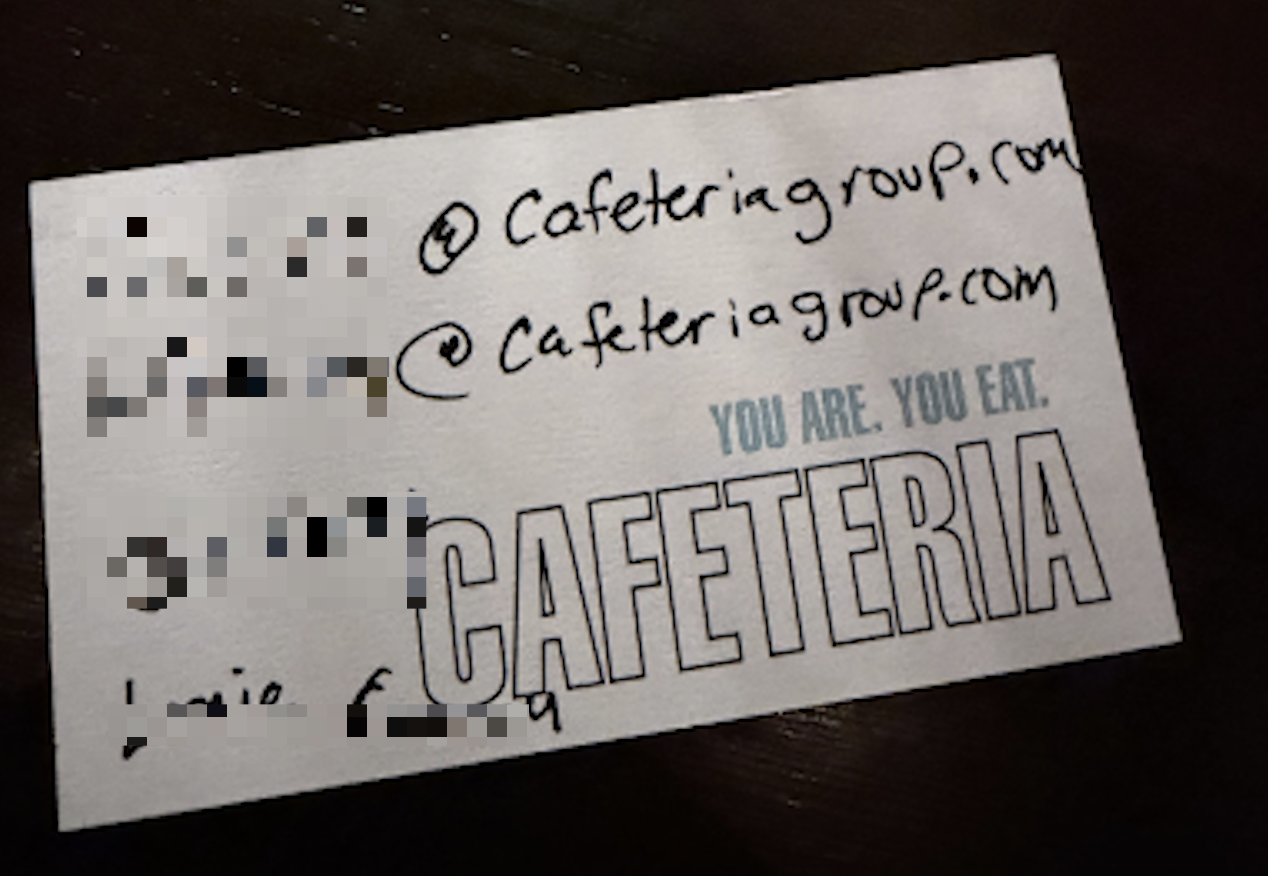
That moment showed me our customers are everywhere. I don’t need to go through corporate gatekeepers to do good. We can take our product directly to people who run businesses and solve real problems.
But it was more than that. We’d found a way to serve both sides—connecting people to opportunities while solving a problem businesses will pay to fix. A win-win.
What We’re Actually Building
Towards the end of last year, I sat down to test what Brandon had built. I’d never actually been interviewed by our own AI. When I said “I grew TheGrio’s usership,” it didn’t move on. It asked: “By how much? What specifically did you change? What happened when you implemented it?” It was following STAR methodology—Situation, Task, Action, Result—probing until it got the complete story from me.
I teared up. I got to see how potent of a tool we had developed. How I wish I had something like this when I was running TheGrio. We’d developed not something that would be a “want to have” but a “need to have.”
I sent a message to the team that night: “Really remarkable interviewing with Malia. This is really cool. Incredible actually. Proud of you, proud of your work and I’m proud of our team.”
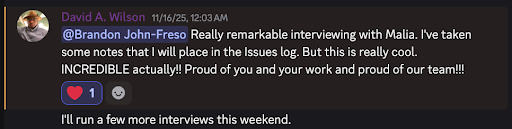
That was the moment I truly understood the potential impact of what we were actually building. Not a resume screener. Not a keyword matcher. A tool that unflattens people. It provides layered insights on who someone actually is, how they solve problems, and what makes them unique.
Brandon built matching algorithms for dating apps. He learned that compatibility isn’t about matching keywords—it’s about understanding how people actually behave when things don’t go as planned. I spent 20 years as a journalist learning that follow-up questions reveal the true story behind prepared statements. Kai, at 24, understands what it’s like to be interviewed in this AI-saturated market in a way Brandon and I don’t.
My job is bringing all of that together. Three generations, three perspectives, building something that helps people be seen for who they actually are.
Where We Actually Are
We’re still early but we have momentum. Kai’s gotten us two pilot partners starting this month, with nine more businesses evaluating paid pilots. I’m still raising our bridge round—figuring out how to make a small runway work while we prove this thing out.
My job has been to keep us afloat while Brandon codes and Kai talks to customers. That means fundraising over and over again, working my network, presenting the vision, refining the pitch. It’s a tremendous responsibility. Some weeks I wonder if we’re running in place. Other weeks I’m amazed at how far we’ve come.
I’m pushing for 400 small business customers by Q4 2026. Honestly, I don’t know if that’s ambitious or conservative. We’re learning as we go.
What I do know: we’re in a race against the clock, and the clock is runway. We’re competing against players who have more money and more time in market. But I have something they don’t: I know exactly who our customers are and where to find them. And we can actually help them.
That feels like something special.
Build With Me
This is the first in a series of posts where I’ll be building for the world to see throughout 2026. Honestly, it feels uncomfortable—sharing mistakes in real-time, admitting uncertainty. Not the polished version but the reality. What works, what doesn’t, the conversations that change how I think, the mistakes I make and what I do about them.
If you’re a small business owner who’s felt that hiring frustration—the drowning-in-applications-but-can’t-find-anyone paradox—I’d love to talk. I’m looking for businesses to pilot with, to learn from, to build this alongside.
And if you’re someone who’s currently on a founder’s journey, trying to figure out how to make it work when the runway’s tight and the market’s moving fast and you’re not sure if you’re onto something or just stubborn—I’m with you.
You can reach me at david@pier.so. Let’s build together.
David Wilson
Co-founder & CEO, Pier
January 2026